Weight Training for Older Adults
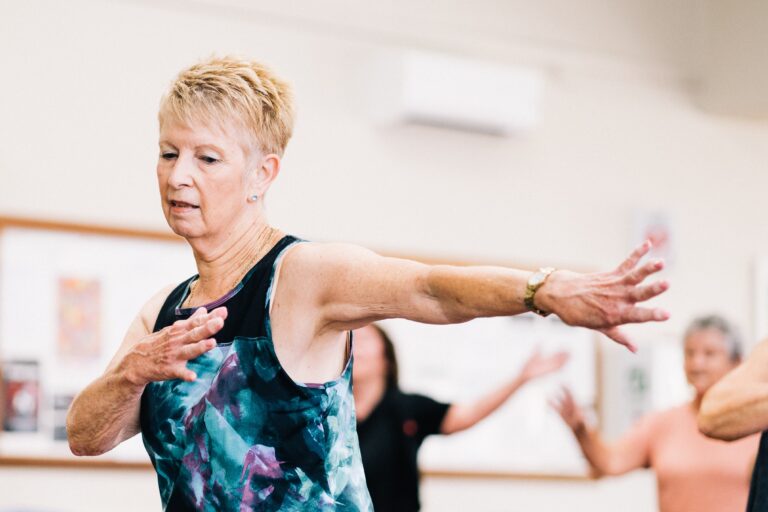
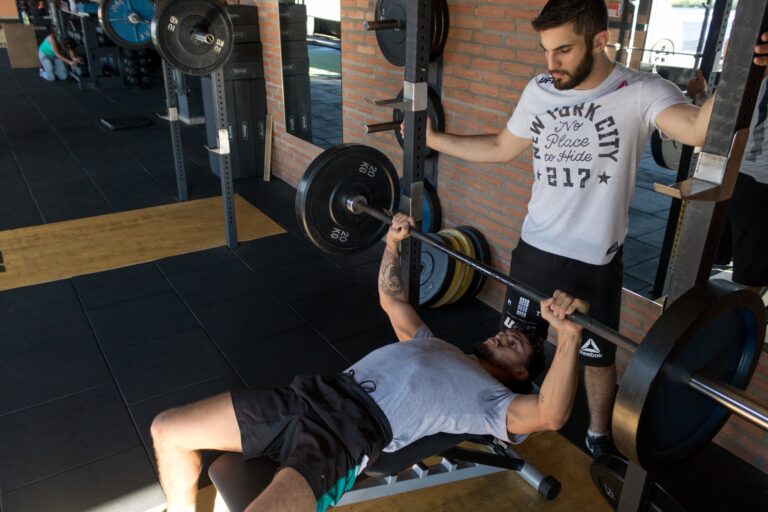
Incorporating weight training could improve the quality of life for many older adults. Weight training would not only help build muscle mass but it will also increase muscle strength and endurance. Regular weight training as part of a exercise routine would also help with balance, motor coordination and stability.
Check with your Doctor
If you have not had a physical exam lately, that would be your next step before starting any exercise routine. It is very important to know if there are any medical issues that would effect your ability to exercise. Your doctor may have advice on where to start and exercises that would be most beneficial for your health needs.
Once you get the go ahead from your doctor you can start working on your routine. All workouts should begin with a warm-up and stretching for 10 to 15 minutes. Walking around slowly and swinging your arms is a good start. Then trunk rotations, walking lunges, and leg swings. Warming-up and stretching is one of the best ways to prevent injuries.
It is recommended that anyone working on a exercise routine, alternate days, switching between aerobic and strength exercises. Maintaining a regular schedule of weight training two or three times per week will help provide stimulus for the increase of bone density, muscle mass, and muscle strength. The optimal session would be 8 to 10 exercises with 10 repetitions per set and a 30 to 45 second rest in between each set.
Sample Weight Training for Older Adults
- 10 to 15 minutes warm up
- Overhead Press (with dumbbells)
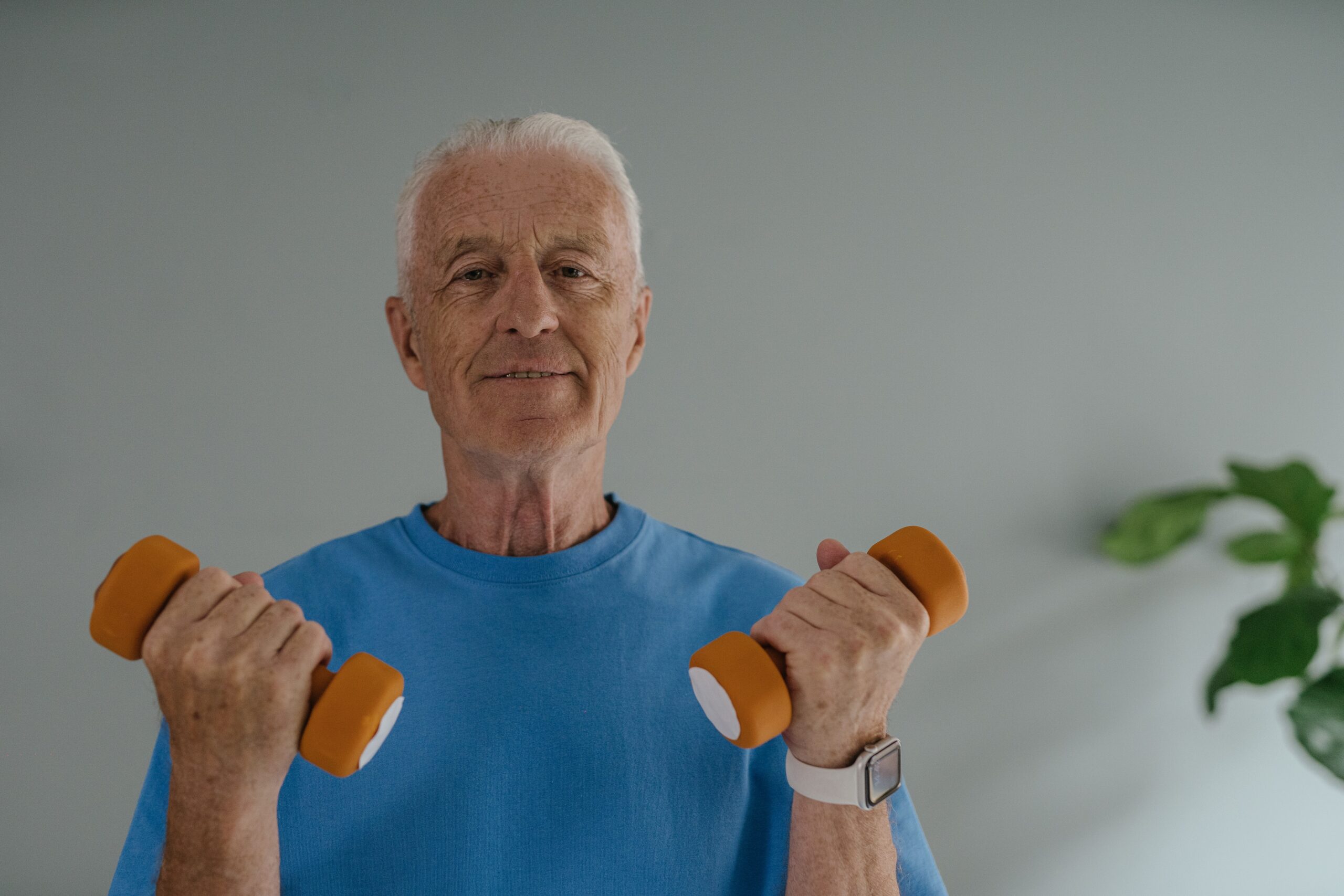
- Arm Curl (with dumbbells)
- Walking Lunges
- Chest Press
- Front Raise (with dumbbells
- Shoulder Squats
- Leg Press
- Triceps Extensions (with dumbbells)
- 10-15 minutes cool down
Everyone should gradually ease into any new exercise routine, giving your body time to recover between training sessions. When you feel stronger and have more endurance, you can extend the time and intensity of the exercise routine.